
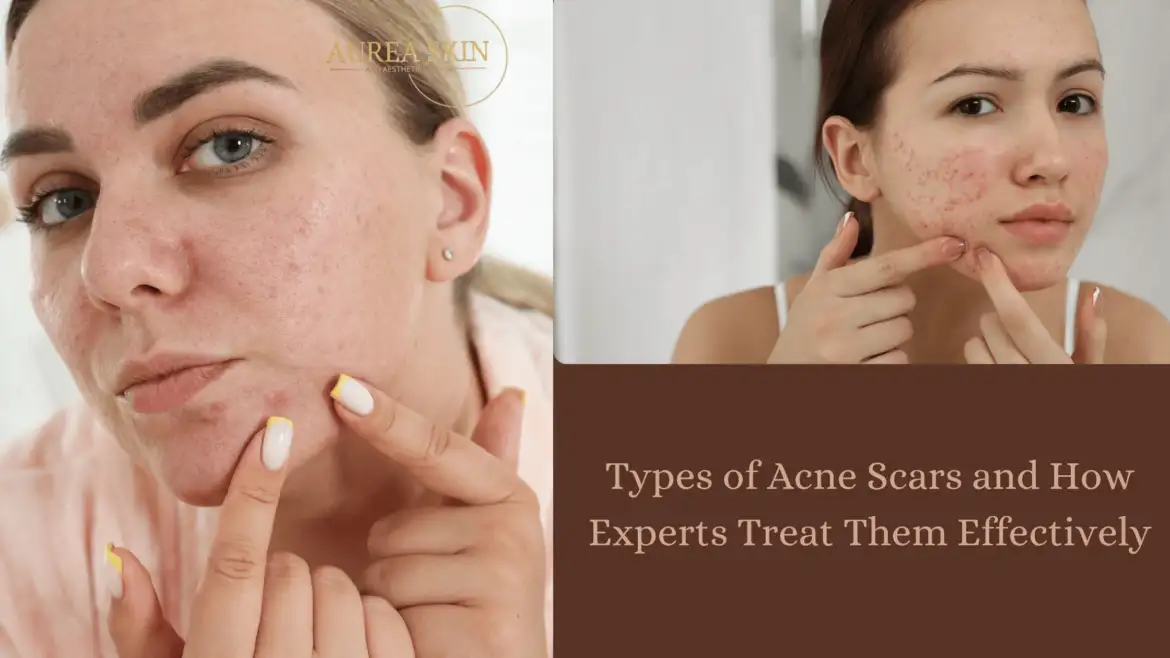
Acne may fade over time, but the scars it leaves behind can have a lasting impact on confidence and skin texture. These scars develop when severe acne damages the deeper layers of the skin, leading to uneven healing. The good news is that modern dermatology offers advanced treatments to reduce and improve the appearance of acne scars effectively.
In this blog, we’ll cover the different types of acne scars and the specialized treatments experts use to restore smooth, clear skin.
Common Types of Acne Scars
1. Ice Pick Scars
These are narrow, deep scars that look like tiny “punctures” in the skin. They are the most challenging to treat because of their depth.
2. Boxcar Scars
Boxcar scars are broad with sharp edges, creating a pitted or crater-like appearance on the skin. They often occur on the cheeks and temples.
3. Rolling Scars
These scars cause the skin to look uneven and wavy due to their sloping edges. They are usually the result of long-term inflammatory acne.
4. Hypertrophic Scars
Unlike the pitted scars mentioned above, hypertrophic scars are raised areas of thickened skin. They are caused by excess collagen production during the healing process.
5. Post-Inflammatory Hyperpigmentation (PIH)
Technically not a scar, PIH refers to dark spots or patches left behind after acne heals. Though temporary, they can take months to fade and may need targeted treatments.
Expert Treatments for Acne Scars
Dermatologists use tailored treatments to target specific scar types and skin conditions, including:
Laser Resurfacing: Helps improve skin texture by stimulating collagen production and resurfacing the outer layers.
Microneedling with PRP: Tiny controlled punctures along with platelet-rich plasma boost natural healing and reduce scarring.
Chemical Peels: Medical-grade peels smoothen skin and help with pigmentation and shallow scars.
Subcision: A minor procedure where fibrous scar tissue is released to improve skin texture in rolling scars.
Dermal Fillers: Hyaluronic acid-based fillers help raise depressed scars and restore smoothness.
Steroid Injections: Useful for raised (hypertrophic) scars, helping to flatten and soften the tissue.
Customized Combination Therapies: Often, dermatologists combine treatments for best results depending on scar severity and skin type.
Conclusion
While acne scars can be stubborn, they are not permanent. With advanced dermatological treatments and personalized care, it’s possible to achieve smoother, clearer, and healthier-looking skin. The key is early intervention and expert guidance to choose the right combination of therapies.
FAQs
Q1. Can acne scars go away completely?
Mild scars may fade, but most require professional treatments for significant improvement.
Q2. Which treatment works best for acne scars?
The best treatment depends on scar type and severity. A dermatologist may suggest lasers, microneedling, or chemical peels.
Q3. Are acne scar treatments painful?
Most procedures are well-tolerated with the use of numbing creams or local anesthesia.
Q4. How many sessions are needed to treat acne scars?
Multiple sessions are usually recommended, depending on the treatment type and depth of scars.